
Surfaces Built to Handle Freeze-Thaw Cycles
Exterior Painting in Ossining for properties showing weathering damage from seasonal temperature swings
When water enters exterior paint through microscopic cracks, it expands during freezing temperatures and forces the coating away from siding—creating the peeling and blistering visible on Westchester homes by late winter. Exterior painting addresses this cycle by removing failed material, sealing wood and composite surfaces against water infiltration, and applying finishes formulated to flex as temperatures shift rather than cracking under stress. Color Wheel Painting Inc works on residential and commercial properties across Ossining and Greenville, handling siding, trim, and fascia with prep methods designed for the Hudson Valley's seasonal extremes and the salt air exposure affecting riverfront properties.
The process begins with surface evaluation to identify where water has already penetrated substrate, followed by complete removal of compromised coatings, wood repair where rot has started, and application of weatherproofing primers before any finish work begins. Properties near the Hudson River require additional attention to salt-air resistance, as standard exterior paints break down faster when exposed to airborne salts that accelerate oxidation and surface chalking.
Arrange an on-site consultation to assess siding condition and determine what prep work your property requires before painting..
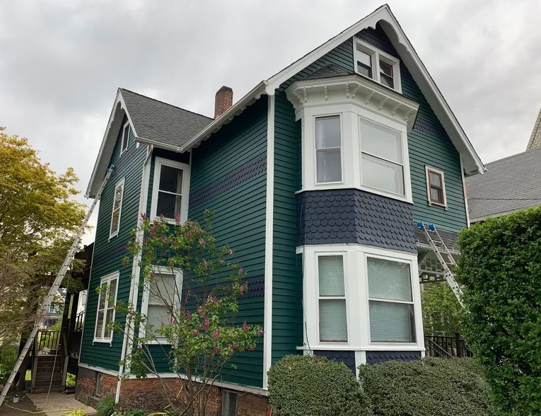
What Changes Once Weatherproofing Is Complete
Proper exterior painting involves scraping all loose material down to stable substrate, sanding to create uniform texture, applying primer that penetrates wood grain and seals against moisture entry, and finishing with coatings that remain elastic enough to move with siding as it expands in heat and contracts in cold. Hudson Valley properties see temperature swings of sixty degrees or more between summer afternoons and winter nights—finishes that dry too hard crack under that stress, while those formulated for flexibility maintain adhesion across seasonal cycles.
After completion, siding no longer shows peeling at board edges or around trim joints where water previously entered. The finish holds consistent color without the chalky residue that forms when coatings break down under UV exposure combined with salt air. Wood stops absorbing water during rain, preventing the rot that starts when moisture reaches substrate through failed paint, and trim remains protected where it meets roofline and window frames—joints where weatherproofing matters most.
The owner personally reviews every exterior project to confirm prep quality and material selection meet durability standards, ensuring work lasts through multiple freeze-thaw seasons rather than requiring touch-ups within two years. Projects include fascia and trim detailing, not just field coverage, because water entry at edges causes more substrate damage than broad-surface weathering..
What Property Owners Usually Ask
Clients across Westchester County and the Hudson Valley region ask about timing, material selection for their specific exposure conditions, and what separates durable exterior work from standard residential painting.
When should exterior painting happen in Ossining?
Work schedules during periods when overnight temperatures stay above fifty degrees for at least forty-eight hours after application, allowing primers and finish coats to cure completely before the next weather event—typically late spring through early fall in Westchester County.
Why does exterior paint fail faster on some homes?
Properties with southern or western exposure absorb more UV radiation, accelerating coating breakdown, while homes near the Hudson River face salt air that oxidizes finishes and requires premium paint formulations to maintain adhesion beyond three years.
What prep happens before any paint goes on siding?
All failing material is scraped to stable substrate, wood is sanded smooth, damaged sections are repaired or replaced, and surfaces receive weatherproofing primer that seals against water entry—skipping primer on bare wood leads to adhesion failure within one season.
How does trim painting differ from siding work?
Trim requires separate attention because joints where different materials meet create water entry points; fascia boards near rooflines see more moisture exposure than vertical siding and demand additional sealing and heavier primer application to prevent rot from starting behind the finish coat.
What indicates a lasting exterior paint job?
Finishes that remain bonded at all edges after the first winter, coatings that don't chalk or fade unevenly after two summers, and trim that stays sealed at joints where it meets other materials—these outcomes depend on prep thoroughness and material selection appropriate for Westchester's climate patterns.
Color Wheel Painting Inc has completed exterior projects across Ossining, Greenville, and surrounding Westchester areas for twenty years, refining methods to handle riverfront exposure and seasonal weathering. Request a project estimate to review your property's specific weathering patterns and prep requirements.