Surfaces Ready for Flawless Paint Application
Drywall Finishing in Ossining for renovation projects and new construction requiring smooth wall surfaces
Westchester renovation and new construction projects demand professional drywall finishing before any paint can be applied—unfinished seams, visible screw heads, and surface imperfections show through every coat and become more obvious as light moves across the wall throughout the day. Color Wheel Painting inc provides drywall finishing, taping, mudding, and repair for residential and commercial properties across Ossining, Greenville, and the Hudson Valley. The process transforms raw drywall panels into continuous, smooth wall surfaces that accept paint evenly and reflect light uniformly.
The work involves applying paper or mesh tape over seams, embedding it in joint compound, then building up multiple coats to create an imperceptible transition between panels. Each coat is sanded smooth once dry, with attention to corners, screw dimples, and anywhere the wall plane changes. The final surface shows no ridges, shadows, or texture variation when inspected under angled light.
Arrange an on-site evaluation to assess drywall condition and finishing requirements for your project..
How Drywall Finishing Addresses Surface Imperfections
Taping and mudding correct the gaps and fastener depressions inherent in drywall installation, building up joint compound in thin layers to avoid cracking as the material dries. Sanding between coats removes tool marks and feathers edges so compound transitions blend into the surrounding panel. The number of coats depends on finish level requirements—standard residential work typically uses three coats, while commercial spaces or areas receiving flat paint may require additional passes to meet higher smoothness standards.
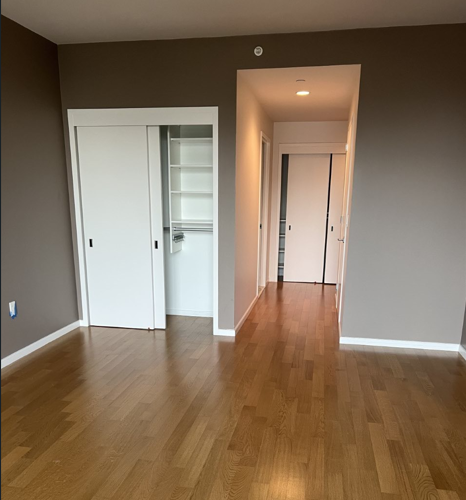
After finishing is complete, walls appear as continuous surfaces with no visible seams or fasteners, and paint applies uniformly without catching on ridges or highlighting depressions. Light moves across the surface without creating shadows at panel joints, and corners form clean, straight lines. You'll notice that primer and paint spread smoothly without dragging or revealing texture inconsistencies beneath.
This process integrates with painting timelines, since finished drywall must cure before primer application. Repair work follows the same taping and compound sequence but on a smaller scale, addressing cracks, holes, or damaged sections within existing walls. Dust control during sanding is essential in occupied spaces, requiring containment and ventilation planning for commercial or multi-unit projects..
Common Questions About This Service
Property owners preparing for painting or managing renovation projects often ask about finish quality, repair capabilities, and how drywall work fits into project schedules.
What determines how many coats of joint compound are needed?
Surface imperfections, seam width, and the finish level required by your project—residential interiors typically need three coats, while high-visibility commercial spaces may require four or five to eliminate any texture.
How long does drywall finishing take before painting can start?
Each coat of joint compound requires drying time, usually 24 hours, followed by sanding, so a three-coat finish typically spans three to four days before primer application.
Why does flat paint show drywall imperfections more than satin or gloss?
Flat finishes reflect light diffusely, making any surface irregularity visible as a shadow or texture change, while glossier paints reflect light uniformly and mask minor imperfections.
What drywall repair issues are common in Ossining renovation projects?
Westchester properties undergoing multi-room updates often reveal cracking at door frames, nail pops from settling, and water damage near windows or rooflines that require cutting out and replacing sections before refinishing.
How is drywall finishing different from plastering?
Drywall finishing uses pre-manufactured panels and joint compound to create smooth surfaces, while plastering applies wet material over lath or masonry and requires different curing times and application techniques.
Color Wheel Painting inc handles drywall finishing as part of full-scope residential and commercial renovation projects throughout Westchester County, supported by 20 years of coordinated multi-trade work. Contact the team at (201) 338-7224 to discuss surface preparation needs and project timelines.